

In the first part of this branded calling series, we looked at how the US telcos are trying to solve the trust problem in voice calls using STIR/SHAKEN and Rich Call Data. And yes, I did promise a deeper dive into the tech behind that… but not just yet.
Today, let’s cross the ocean and look at something closer to home – what’s happening in India? More specifically, what is Airtel doing to solve the same problem?
Because here’s the thing – India has a massive voice economy. We’re talking millions of business calls every day – banks calling to verify KYC, delivery guys trying to find your apartment, insurers trying to renew your policy, doctors following up post-consultation… and almost all of them getting ignored because “unknown number = spam”. We’ve trained ourselves not to pick up, and it’s killing trust.
But Airtel – one of India’s largest telcos – seems to be trying something to fix this. It’s not STIR/SHAKEN (India doesn’t have it yet). It’s not Rich Call Data (RCD) either – at least, not in the standards-based form the US uses. What Airtel is doing is building its own ecosystem for branded calling. Let’s break it down.
Airtel Branded Calling – the basics
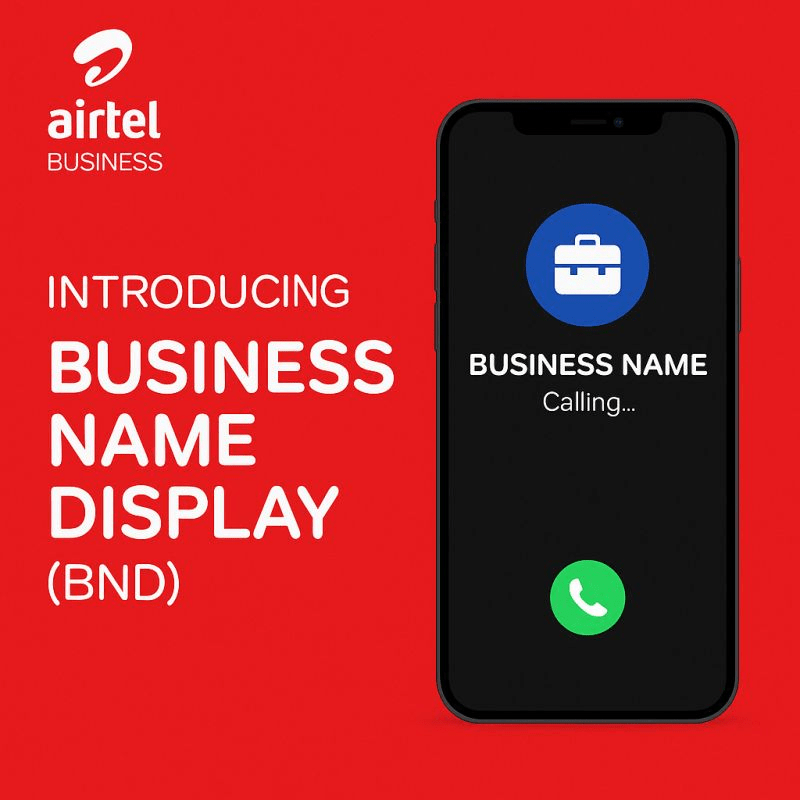
Officially called “Business Name Display” or “Branded Calling”, Airtel’s offering allows enterprises to display:
- The name of the business
- A logo or graphic (on supported devices)
- Sometimes, a short call reason or category
So when you get a call from, say, HDFC Bank, it doesn’t just show a number – it shows “HDFC Bank”, maybe even with their logo. And this is built into Airtel’s mobile network. No app install needed.
Sounds familiar? Yeah – it’s conceptually similar to Rich Call Data, but done in Airtel’s own, proprietary way.
How does it work?
This is where things get interesting – because there’s no formal standard like STIR/SHAKEN in play, Airtel’s approach is more practical and business-led.
Here’s the general flow:
- Enterprise signs up with Airtel Business or through a telco partner (like Karix, Route Mobile, or Tata Tele Business Services).
- Airtel verifies the enterprise identity and the numbers it owns.
- The enterprise uploads branding info – business name, logo, maybe even category of service (banking, delivery, healthcare, etc.).
- Airtel’s systems map that branding to the registered numbers, and when calls go out from those numbers to Airtel subscribers, the call branding gets displayed on the recipient’s phone.
But where is this branding actually displayed? Well, Airtel can only show branding on phones that support the caller name display framework, which means relatively newer versions of Android and iPhone.
Also worth noting: Unlike US carriers, Airtel is not using cryptographic signing like STIR/SHAKEN, so the call branding doesn’t verify the call is untampered – it only displays what Airtel believes is true. Again, the Indian telephony system is more tied down and secure than the US one, so number spoofing is rather more difficult in the Indian context, so this is not a concern.
Pricing and Business Model
Naturally, this isn’t free. Airtel charges enterprises for the call branding service – usually on a per-call or per-number basis, sometimes bundled as part of a CPaaS voice plan. The rates aren’t public, but from what we’ve seen in partner decks and discussions, it’s:
- Affordable for large-scale enterprises
- Offered as a premium value-add
- Typically part of broader “customer engagement” packages
Why would an enterprise pay for this?
Because in test deployments, branded calls had 3x to 5x higher pickup rates compared to regular calls. When people know who’s calling – they answer. Simple as that.
How is this different from TrueCaller Verified Business Caller ID?
A very fair question. TrueCaller also displays caller names and logos – but:
- It relies on crowdsourced data, not telco validation
- It needs the Truecaller app to be installed
- It’s not telco-integrated, and can be spoofed more easily
Airtel’s approach is more controlled and enterprise-grade – even if it lacks the polish or reach of a dedicated app like TrueCaller.
What’s Next?
Airtel is leading the charge, but Jio and Vodafone-Idea are reportedly working on similar offerings. There’s also a lot happening in TRAI’s regulatory sandbox, and with CPaaS vendors trying to build India-specific solutions. In the next part of this series, we’ll explore another approach to Call Branding – what happens when the enterprise controls the branding themselves, via their app? We’ll look at app-based branding models, SDK-driven verification, and something called Identity Assurance.